Saturday, November 4, 2023

Impossibly Good

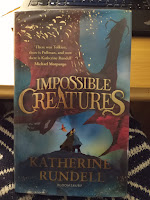
 One of my favourite authors has done it again. With Impossible Creatures Katherine Rundell has upped the ante on fantasy stories.  

Here the "real" world  overlaps and crashes into one of myth, populated by the eponymous Creatures (each beautifully illustrated and given a brief description at the start of the book), and as many heroes and villains as needed to carry the story along at sometimes breakneck speed, leaving the reader (or this one anyway) breathless.

But there are layers, as in the best of stories. There is the adventure, cracking along full of suspense, and plenty of twists and turns. But there is also high emotion: loss and grief, hope and fulfilment, loyalty and betrayal.

In short order we are introduced to Christopher, sent to spend time with his grandfather in an isolated part of Scotland, to Mal (with her magical `flying` coat), her great-aunt Leonor and ...."the murderer." Who could possibly resist reading on?

Very quickly Christoper and Mal`s worlds collide and the two embark on a mission to, as it says on the fly-leaf of this beautifully produced book, "transform the destiny of the world".

We read about the children`s attempts to halt the potential extinction of species and counter the things that are going wrong in the imaginary world and there is no avoiding seeing the whole story as an allegory. However, the story-telling is so masterful there is no sense of being preached at and ultimately it is a story of hope and love. 


Monday, July 31, 2023

Three for the price of one.........

 So back to that thing about reading books that are marketed for young people ("even though you are so old and wise")* and here`s three authors who never let you down. And as an added bonus three spirited, joyous female characters who refuse to be pigeonholed. 

I read The Outlaws Scarlett & Browne  a while ago and I`m not sure why I didn`t write about it then as I loved it.  It`s set in a futuristic world where our heroine  is doing her best to survive in  hostile and dangerous surroundings. From the opening paragraph it is clear that to date she is managing pretty well: 
 "That morning, with the dawn hanging wet and pale over the marshes, Scarlett McCain
 woke up beside four dead men. Four! She hadn`t realized it had been so many. No wonder she felt stiff".                  
 It doesn`t take long for us to discover that she is alone, self-sufficient and fiercely focused on staying alive. Somewhat incongruously though she also carries a prayer mat and a "cuss-box"  into which she drops a penny every time she swears, which she does regularly. What she probably doesn`t need is for her life to be complicated by one Albert Browne, in almost every regard completely different, given to staring dreamily into space, not paying attention and apparently pretty helpless. 
Thus begins the tale of The Outlaws Scarlett & Browne. It is full of derring-do naturally but also slowly begins to build up the stories of these two unlikely partners and how they got to where they are. Their developing relationship as well as their adventures makes for a page turning narrative, written with sparkle and energy and - a stand out feature - great wit. 
How lovely then to find the second in the series is just as good, if not better, simply because it digs even deeper into Scarlett`s and Albert`s backgrounds and develops their relationship. They are now  The Notorious Scarlett & Browne, their reputation for "magnificent hold-ups, confounding robberies and perfect getaways" meaning there is a price on their heads and their exploits become more dangerous than ever. Jonathan Stroud`s writing is so good it carries you along effortlessly and makes you hope there`s a third story in the pipeline.

                                                    *************************

I think Scarlett and Maggie McGregor, the central character of One Shot  by Tanya Landman, would have got on well, despite living different lives, in different places and altogether different times.  It is, as the author herself says, "inspired by the real-life "rags to riches" story of famous sharp-shooter Annie Oakley.....an imagined tale of how it might have felt to have had a childhood like hers." And what how wonderful to find a story that packs such a punch into such a relatively short book. 
Maggie is born into poverty. Her mother is "tired of raising babies" by the time Maggie is born and their relationship is non-existent whereas Maggie is very close to her father. When he dies everything changes and she is forced out into a world of drudgery, violence, exploitation, prejudice and abuse. Her one real skill is shooting, which she learnt with her father along with a deep love of the forests and wilderness around her: 
                      "When Pa used to take me out hunting, we`d walk along, my palm in his, joy radiating from his skin. It filled Pa`s soul - the wonder and beauty of the trees, the way the sun shone through the leaves and dappled the forest floor, the sound of birdsong."
But shooting and hunting are considered inappropriate for a young lady and however hard Maggie tries to fit in - partly in the hope of some sign of approval from her mother - she finds it impossible. Eventually though, with persistence and bravery she wins her freedom and of course (plot spoiler!) the heart of a young man who sees her for the person she is. 
Published by Barrington Stoke Teen in their "super readable" series, with dyslexia friendly font and off white paper, this is an accessible, beautifully written inspirational tale.

                                                    ******************************

And then there`s Mina, the sensitive, inquisitive, wonderfully imaginative eponymous heroine of David Almond`s novel. This has to be one of the most joyful books it is possible to read about nurturing a child`s curiosity and fascination with the world (not to mention with words themselves) as well as negotiating their place in it, especially hard if sometimes one is seen as different: as Mina herself says
                             "She was just nine years old. She was very skinny and very small and she had jet black hair and a pale pale face and shining eyes. Some folks said she was weird. Her Mum said she was brave."  (And by the way - her Mum needs a shout out) 
Though she is younger, Mina has the same persistence and courage as Scarlett and Maggie, the same determination to live life on their own terms. You could hardly wish for three better role models. In our local library (https://www.livelifeaberdeenshire.org.uk/libraries ) Mina is categorised as Junior Fiction, The Outlaws Scarlett & Browne, The Notorious Scarlett & Browne and One Shot as Young Adult but frankly who cares? Forget categorizations (I think Mina would approve) and just read them.

                                                     ******************************
*

👍😉


Thursday, July 27, 2023

Banish...despair...all ye who enter here........

 Can`t believe I nearly didn`t read this. I knew, vaguely, about Good Law Project. Knew, vaguely, who Jolyon Maugham was. Thought it might be a bit dry and probably a bit depressing. And thought that nevertheless I should read it. So I did. And soon found out it was neither dry nor, ultimately, depressing though there are some depressing stories in it.

The depressing part of it is how, in order to maintain their status, influence and wealth, the powerful and rich are able to bend and twist and not least afford what should be a tool equally accessible to all. Having explained broadly how the system should work, Maugham examines in some detail how again and again it  fails to hold power to account.

So far so disheartening but this is where Good Law Project comes in. Established in 2017 it intially had what Maugham calls a "modest" infrastructure - a bank account, a website and email but also Maugham`s unwavering belief that the law could do better.

At first glance he might have seemed an unlikely campaigner: comfortably off as a tax lawyer, he was a member of the very establishment he started to challenge, whose members it should be noted became very irritated, not to say angry, at what they saw as his betrayal of that club.  Maugham also made himself more and more unpopular with politicians and sections of the press and often came under fierce even hostile criticism..

Nonetheless, working with other like-minded campaigners, carefully addressing amongst other things the issue of how to fund their work to maintain independence, Good Law Project is now the biggest legal campaigning group in the country. 

Maugham himself comes across as self-deprecating, under no illusion that he and his colleagues are going to change the world overnight nor even that they always get things right. But Bringing Down Goliath is a vital and motivational read and best of all can be put on the bookshelf labelled Hope.


Wednesday, May 17, 2023

"All texts must be open, to all people" (Katherine Rundell)

Katherine Rundell`s book Why You Should Read Children`s Books, Even Though You Are So Old And Wise has been mentioned before here and no doubt will be mentioned again....and again...and again but especially when I`ve read something as enthralling as Jospeh`s Elliott`s Shadow Skye trilogy.

It is both sad and misguided that children`s books are still so often seen as the poor relation of fiction, that borrowers in the library service where I work still feel the need to apologise shamefacedly for having enjoyed a brilliant Young Adult book, never mind one categorized as Junior Fiction. (The categorization of books is a subject for another time😉)

Saddest of all is that some well known figures in the literary world get so snooty about it (no names, no pack drill but I see you), in the process making the problem worse as well as displaying an astonishing ignorance about some of the factors involved in encouraging children to become confident and enthusiastic readers.

So back to the books that prompted that mini-rant:

 
Set on an alternative Isle of Skye, this magnificent saga takes its heroes and heroines to the plague devastated mainland of Scotland, across the water to Norway and eventually to the kingdom of England, ruled by a despotic king and his allies, all in an attempt to defend their clan`s homeland.  There are terrifying shadow creatures known as sgàilean, blood magic, treachery, deceit and even a huge, vaguely familiar Scottish beast. The reader is completely swept up in the pacy narrative but the books real power lies in the three central characters,  Agatha, Jaime and Sigrid and the clever technique of giving each their own distinctive voice and alternating the chapters between them so the story is told from three different points of view.
It works brilliantly: not only is each voice unmistakable (the heading at the top of each chapter to signify who is speaking becomes almost redundant) but their language informs their characters without the need to make explicit observations. Especially delightful is what Elliott refers to in the notes as Sigrid`s "idiosyncratic slang", which absolutely nails her energy and resourcefulness not to mention her wry sense of humour.
Themes of loyalty, trust, love and tolerance run throughout the narrative, challenging our heroes at every turn to make hard choices about what is right and what is wrong. Which is why, when it is handled as well as this, anyone could be proud of saying they`d read it. Or, as Rundell says:
          "...the writing we call children`s fiction is not a childish thing.....(rather it) has childhood at its heart, which is not the same thing."

Monday, May 1, 2023

"Storytelling on a grand scale."

When you get towards the end of a 548 page hardback novel and realise that  you have to resist the urge to check the last page to see what happens while at the same time not wanting it to end at all - that is the absolute essence of good storytelling.  And Demon Copperhead by Barbara Kingsolver has it in spades.

Billed as a  "reimagining" of David Copperfield but set in Kingsolver`s Appalachia it is by no means necessary to have read Dicken`s classic story before embarking on Demon Copperhead. Those who have will recognize some of the characters as playing much the same role as in the earlier novel. But what draws you in perhaps most powerfully in both cases is the relating of the story by the heroes themselves - if, indeed, as David Copperfield says, they turn out to be heroes.

The opening paragraph of Demon Copperhead immediately sets the tone, the language and not least the wry humour which runs through the whole sorry tale of a boy born into poverty of a drug addicted single mother:

                            "First, I got myself born. A decent crowd was on hand to watch, and they`ve always given me that much: the worst of the job was up to me, my mother being let`s just say out of it."

And with that we are launched into an autobiography which rattles along at a breathless pace, following the fortunes and misfortunes of Damon, whose red hair and feral nature soon earn him his eponymous nickname. There`s a large and varied cast of characters whose lives touch Demon`s in one way or another, for better or worse, often as they also are dealing with their own crises of poverty, alienation, and drug addiction. 

As always with Kingsolver, politics and political structures are central to much of the plot but we are not being lectured at: much of Demon`s growing up demonstrates the abject failure of the very systems nominally there to support children in his position. Whether it is lack of resources, lack of political will,  a commentary on the forgotten communities in some parts of America - or indeed a combination of all these - is left for the reader to decide.

In any event it is impossible not to will Demon on, to celebrate his successes and despair when life throws him another curve ball. The writing never falters and with Kingsolver herself having grown up in Kentucky it feels like the story has been written as much from the heart as the head. 


Fact or Fiction?

Dystopian stories, set in an imagined future that often rests on an actual past and present, can make for disconcerting reads. How much more so if this imagined future isn`t in fact that far ahead. Rosa Rankin-Gee`s novel Dreamland falls into that category which is perhaps why, in an author`s note at the end of the book, she goes to the trouble of pointing out that while the story may be fictional "it builds on events and policies that are occurring today" which she then proceeds to delineate, in order to "be clear about which elements are based on fact".
And that`s a sobering thought once you`ve read the novel.  It`s a powerful read made all the more so by the strong first person narration. Chance is one of those characters you remember long after you finish the book. Buffeted by political forces outwith her control, social deprivation, family upheaval and the imminent threat of the consequences of climate change, Chance tries to navigate a way to survive. It sounds grim, it is grim, but there are moments of humour, of love and sheer human resilience that keep you reading on and rooting for Chance to succeed despite the constant, often inevitable, setbacks she faces. 
The backdrop is the town of Margate, a seaside resort whose fortunes have yo-yoed over the years but which, Rankin-Gee tells us in her author`s note, is currently enjoying another renaissance. Nevertheless part of its recent history mirrors the "relocation" theme which in many ways is central to Dreamland and where fact and fiction bump into each other. 
 By the end Dreamland is hard to put down: you`re  holding your breath as Chance aims to take control of her life and prioritise the things that really matter to her. And you`re left in no doubt that if she were to manage that Herculean task, she`d be one of the `lucky` ones.

Wednesday, September 7, 2022

Scarier than ...a really scary thing.

 Not being a massive fan of really frightening thrillers I discovered you don`t need to read them in order to scare the pants off yourself: try The Revenge of Power by Moises Naim and see how well you sleep for a day or two after you`ve finished it. 


A relatively hefty looking tome, it is not a difficult read despite being a detailed analysis of, as the subtitle says, "How Autocrats Are Reinventing Politics for the 21st Century".  In fact it is an extraordinary description of the way in which "populism, polarization and `post-truth` politics" (Naim`s 3Ps) have resulted in a marked increase in authoritarian and autocratic regimes around the world. 

For such dry sounding subject matter it is in fact a dramatic story of corruption, collusion, manipulation, criminality, dark social networks and carefully calculated disinformation which weaken, even destroys, the individual`s ability to distinguish between fact and fiction or perhaps more significantly their desire to do so.

And if anyone`s inclined to shrug and say they don`t "do" politics it might be worth reading just to understand how politics is "doing" them.

Sunday, July 31, 2022

Books and their covers.

 They say you shouldn`t judge one by the other but it was the cover of The Murderer`s Ape, displayed provocatively on the library shelf, that prompted me to borrow the book, despite the fact it is a weighty volume and I knew nothing about its author, Jakob Wegelius.


And what a treat it has turned out to be.  A genuine cracking yarn, with a start, a middle and a very satisfactory happy ending (which is not a plot-spoiler as you know almost from the beginning that it can only end well). This is not to say there aren`t ups and downs in this tale of Captain Henry Koskela and his chief engineer, Sally Jones, a gorilla of many talents and much wisdom. 

Wrongly accused of murder, Koskela, aka The Chief, is thrown into prison and thus Sally Jones embarks on a mission to right the wrong and free him. There are goodies and baddies, and baddies who turn out not to be so very bad, just misled. There are setbacks and triumphs and more setbacks. There are chases halfway around the world, betrayals and the kindness of strangers, not to mention cliffhangers which would make it a wonderful story to read out loud, closing the book at a crucial moment, leaving the audience wanting more.

And yes, the library has classified it as  "Young Adult"  but it should appeal to anyone who can still suspend disbelief and embrace the spirit of an excellent, heartwarming story.

https://www.abebooks.co.uk/servlet/SearchResults?kn=The%20Murderer%60s%20Ape&sts=t&cm_sp=SearchF-_-topnav-_-Results&ds=20 or at your local library e.g. https://www.livelifeaberdeenshire.org.uk/libraries


Thursday, December 9, 2021

A Thing of Beauty

 Julia and the Shark by Kiran Millwood Hargrave, illustrated by Tom de Freston, is truly a thing of beauty in more ways than one but not least because of the way it looks and feels.

The impact of a beautifully produced book can`t be overestimated, especially if it`s a book aimed at young readers.  This hardback edition, as one reviewer says, "will redefine what a children`s book can look like".* 

The cover, in greys and yellows, with the figure of a girl apparently walking into the centre of a whirlpool, surrounded by wheeling birds and the eponymous shark, magically captures a story which includes issues of fear and loss, seeking and separation and mental health.

Inside, the text is interspersed with similarly evocative images and clever overlays which hide and then reveal their subject, thereby creating a feeling of constant movement, of ebb and flow, of migration and return, all of which feed into Julia`s story.

Movement and change are a central theme of the story. Julia`s father has been commissioned to get a remote lighthouse up and running automatically. Her mother, a scientist who studies algae, "a special kind that cleans the water of any bad chemicals and perhaps one day even breaks up some kinds of plastic," is also keen to make the trip in the hopes of being able to be able to study her first passion: "the biggest things that that lived in the coldest seas" and especially a very special kind of shark - a Greenland shark.

So begins a summer of unravelling secrets, new friendships and understandings, not to mention adventures in stormy waters and a shark "older than trees".

Kiran Millwood Hargrave never writes a bad book but this one is very very special and stays in the mind long after it is finished.

* Katherine Webber Tsang


Thursday, September 23, 2021

A genius for story-telling.

Hilary McKay, author of The Swallows` Flight, has that rare gift of writing books for children which, while they often tackle dark and difficult subjects, do so through a lens of compassion, joy, laughter and warmth. She achieves this through the characters she creates and in particular the families that populate her books. In this case the families come from different sides of World War 2 but by the time they connect we are so completely immersed in their respective stories that it turns out there are no "sides" to be taken. 

Instead we watch while essentially decent people, of all ages and personalities, try to negotiate their way through the tragedy and loss that war inevitable brings while embracing whatever happiness can also be found. 

The result is a story, or rather multiple stories, of coping with adversity and opportunity (the latter sometimes even resulting from the former) against a background of family bonds and personal friendships that McKay portrays with such understanding and wit that the reader, or this one anyway, becomes completely invested in "what happens next", surely the hallmark of genius storytelling.

I closed the book with much regret at having to leave the characters behind but then (for the second time in as many months - see previous post) the realisation dawned that The Swallows` Flight is actually the sequel, or, as described on the flyleaf, the companion, to The Skylarks War. Thus I was able to discover the "backstory" to some of the central characters in The Swallows` Flight which only added to the experience.

Perhaps it is worth noting that both books are classified as Junior Fiction and are excellent examples of why (as Katherine Rundell says**) adults should read children`s books. Not only are they beautifully written, they also deal with the traumatic subject of war in a careful, understated but nevertheless honest way and provide a persepective on early 20th century life which must be as far removed from a young person`s life now as it is possible to be!

**Why You Should Read Children`s Books, Even Though You Are So Old And Wise (Never get tired of recommending this book!)


Tuesday, August 31, 2021

A girl, a wolf, a boy..... and a time slip.

 "Dara thought about the lines,thin as mist, between possible and impossible, between real and not real, between here and now and there and then."

Couldn`t happen of course: 21st century boy meets Stone Age girl. Or could it? Depends if you can believe in those thin lines and the feasibility of occasionally slipping across them, backwards and forwards from one to the other and back again.

The strength of The Way To The Impossible Island by Sophie Kirtley is that you absolutely come to believe in the plausibility of such a thing - disbelief not so much suspended as discarded altogether for the duration of the book.

Dara is frustrated by a chronic illness that has kept his life "on hold" until he`s had his Big Operation,  Mothgirl by the idea that at twelve-summers-old she will soon be expected to exchange her "wild, fast-hearted hunting days" with her wolf, By-My-Side, for "woman-days only, slow and dull as mud, filled only with making nutcakes and scraping deerskins and smoking meat upon the fire."

For both of them, the somewhat daunting and mysterious Lathrin Island, exerts a pull - Dara imagining rowing out to it when he`s had his operation and is fully fit, Mothgirl wondering if it`s where her long-lost brother is.

When Mothgirl runs from her home to escape being forced into domesticity and marriage to the son of the odious Vulture and Dara breaks away to escape the devastation and anger he feels at having his operation postponed again, their timelines collide and they end up making the perilous journey across to the island together in a leaky boat.

It is on the island that the adventure gathers pace. Having mourned together the apparent loss of Mothgirl`s wolf companion, they find signs which indicate her brother is, or has been, there and come to believe that Vulture is pursuing them. They learn to communicate with each other, to work together to survive, both finding skills and strengths they didn`t know they had. Perhaps most telling of all they come to understand that "normal" - or "norm-ill" as Mothgirl hears it - might not be for either of them, that there is always room for difference.

The interactions between Mothgirl and Dara are often humorous as they try to understand each other. The story gallops along apace with plenty of cliff-hangers at the end of chapters which mean you have to turn the page and find out what happens next. The conclusion is suitably uplifting as both our heroes have not only survived all sorts of challenges but learnt, as Dara muses, that "maybe there was more to real life than he ever could plan for. Good stuff. Bad stuff. Strange, amazing, scary stuff. No -one ever knew. There was no map. there were no answers."

Not a bad "life-lesson" and the thing that stories can teach so well.


P.S. Missed that there was a book that came before this - The Wild Way Home - which would normally be a bother as this reader at least prefers reading stories chronologically but am reassured The Way To The Impossible Island stands alone quite comfortably. 
P.P.S. Like all the very best books this one has a map of the island at the front. Perfect.


Tuesday, August 10, 2021

Splendiferous indeed

 Sometimes there`s no need to do lengthy reviews. Sometimes the books simply speak for themselves and come into that magical category of "un-put-downable" and in the last couple of months there have been two that definitely fell into that category.

First, The Dictionary of Lost Words  by Pip Williams.  It`s based on real events, the compilation of the Oxford English Dictionary, and centres round the fictional character of Esme whose father is one of the people working in the Scriptorium, the "garden shed" in Oxford where the work took place. Some of the characters Esme interacts with are based on real people and what emerges is a fascinating analysis of the significance of language and its power to define class and identity. In particular, at a time when women were having to fight for equality, it asks who decides which words are "acceptable." 

And if this makes it sound a bit dry, nothing could be further from the truth. It is also a novel about family and love, set against the turbulent times of the First world War and the battles of the suffragettes. A quite compulsive read.

https://www.abc.net.au/news/2020-04-09/history-of-the-oxford-english-dictionary/12010628


The second Splendiferous Story is just that - a cracking tale by Chris Brookmyre. The Cut has been described as "highly original" and that must be partly because one of the main protagonists is a 72 year old woman whose age actually is not  the most remarkable thing about her. Her partner in crime, so to speak, is a young mixed race university student who is trying hard to extricate himself from an environment where he might end up making some foolish decisions. 

Together they set out to right a wrong in this rollicking fast-paced thriller which frequently has the reader tempted to glance at the end of the chapter to see if they manage to extricate themselves from yet another apparently doomed situation.

Perfect escapist reading, sometimes quite dark, occasionally a little gory and with more twists and turns than a twisty-turny thing, to say anymore might give the game away.   Enjoy!


Thursday, June 10, 2021

Stirring Up a Hornet`s Nest

 So there I was thinking I`d quickly rattle off a breathless review of Jeanine Cummins American Dirt...."couldn`t put it down", "fast-paced thriller", "intense", "heart-stopping" etc etc when I was stopped in my tracks, for this novel is not only all of those things but also,apparently, controversial.

I might never have picked it up in the first place if I hadn`t heard an interview with the author on Simon Mayo`s Books of the Year podcast (recommended if only to hear Matt Williams laugh.....) Suffice to say I was hooked the moment I started, despite the brutality of the opening sequence. All the above adjectives apply: I had to resist the temptation on several occasions to check the last page to see what happened but at the same time found I didn`t want it to finish (which had a lot to do with the quality of the writing).  I also felt I`d learnt a lot...though it turns out I may not have........

Having finally finished it I went back to the podcast and realised that  I`d only half heard it. For it turns out that some people, authors and reviewers mostly from what I can see, objected to American Dirt on the grounds that Cummins wrote a book about Mexican migrants although she is neither Mexican nor a migrant. The ensuing debate got heated, especially once Oprah Winfrey had picked the novel for her book club. 

There is plenty online so anyone interested can find out more (starting here is probably as good a place as any:  https://www.vox.com/culture/2020/1/22/21075629/american-dirt-controversy-explained-jeanine-cummins-oprah-flatiron) and I recommend listening to the author  on the podcast, discussing  how she dealt with the storm that blew up around her and the book.

Some folk might take issue with the idea that it`s possible to learn anything from a book written by someone who hasn`t experienced what she`s describing, regardless of how much research was done, but I did find it, as one reviewer put it, "an eye-opener" as well as a page-turner.

 So the recommendation stands but maybe read it before investigating the ensuing furore. 


Tuesday, March 2, 2021

"We`re not separate from nature but part of it."

The title of Dara McAnulty`s book Diary of A Young Naturalist does nothing to prepare the reader for the intensity of the experience of reading it. Once drawn into the world of Dara and his family it is nigh impossible to leave until the book is finished. Whatsmore, when you finally lift your head and look around you may fnd that, for a while at least, you are looking at the world through different lenses.

At one level Diary is just that, the description of a year in a young adolescent`s life as he observes the natural world around him and copes with the ups and downs of growing up. These are only heightened by the fact that not only is Dara autistic, so are his two siblings and his mother. As he says, it`s his Dad who is the "odd one out, and he`s also the one we rely on to deconstruct the mysteries of not just the natural world but the human one too."

Of the various strands that are woven throughout the book, the strength and warmth of, in Dara`s own words, this "eccentric and chaotic bunch" is what holds the whole thing together: "as close as otters, and huddled together, we make our way in the world."

The affinity they share supports Dara as he spends long hours taking in every detail of the  natural environment that surrounds him, as he deals with often overwhelming emotions, from happiness to grief and pretty much everything in between; as he copes with school in a world that tells him he doesn`t "look autistic" and makes him "fair game" for bullying and, perhaps most importantly, as he tries to visualize how his future as a "would-be scientist" and passionate environmentalist can evolve from this maelstrom. 

And if all that sounds a little too angst-ridden to make for a cheerful read, the energy and humour of the book will come as a surprise. This often noisy, rambunctious family, dashing off to immerse themselves in forests, climb mountains or explore rivers will take you along for the ride.  There are stories, there is music, there are moments of exquisite stillness and silence but there is also activism and political debate. Most of all there is kindness, not only within the family but towards a human world that doesn`t always deserve it. expressed through the quite beautiful writing which flies in the face of the assessment of a teacher who once claimed that Dara would "never be able to.....string a paragraph together". 

I do hope he/she reads this dazzling work and reconsiders.  


Tuesday, January 12, 2021

"You don`t have to understand life. You just have to live it."

Whenever you approach a book you`ve been meaning to read for ages, a book which has been praised to the rafters and sold millions of copies, it`s a nerve-wracking thing........perhaps it`s been over-hyped, perhaps it`s not as good as everyone says.....what if you have to admit to not loving it ........

Well, phew! Matt Haig`s The Midnight Library is a clever, warm, poignant reflection on the way we deal with what life throws at us, how we react, what we regret and how we can find the hope and resilience to keep going.

These are universal themes but addressed here with such kindness and humour it`s hard to put the book down as you follow the many lives of Nora Seed. 

As Mrs. Elm, the librarian, says;
                    "Every life contains many millions of decisions. Some big, some small. But every time one decision is taken over another, the outcomes differ. An irreversible variation occurs, which in turn leads to further variations....."

A little suspension of disbelief is required as Nora tries out potential variations to the life she has decided to abandon because she is "just really crap at it. At life." She is in pain, aching with despair, not in a black hole but the black hole itself , full of regrets, "drowning in herself".

Thankfully the author doesn`t deal in pat answers and happy ever-afters because, guess what, life ain`t like that! And yes, ultimately Nora returns to the life she intended to leave (not really a plot spoiler) but aware that the important thing is simply to be alive:  without that there is no hope, there is no potential, with it there is ""a future of multifarious possibility".

Could have been cheesy, could have been sentimental, could have coloured everything rosy but it doesn`t.  Nora finds a way to embrace the simple fact of her existence, not seeking a nebulous `perfection` or giving up when it becomes clear there is no such thing. 

One of those books that will stay with you: it`s definitely worth a try - the book that is - though the same might be said of life.


Thursday, December 3, 2020

Defending the Commons


  Recently I came across a small piece in the newspaper highlighting the “50,000 miles of `lost` paths” in England and Wales:

                “thousands of volunteers compared Ordnance Survey maps with historical maps and found 49,138 miles of “missing” paths left off official maps drawn up in the 1950s. They must be claimed for inclusion in OS maps by 2026 or they will vanish from record.

          Normally I might have shrugged and thought `that`s a shame`, but it so happened that I was reading Guy Standing`s Plunder of the Commons at the time so my reaction was….well …. more robust. Professor Standing`s book  demonstrates how it is possible for footpaths to go “missing”, but it covers much much more than that.

          In essence it describes how our “Common Wealth”, has been chipped away at over centuries and in this case Common Wealth refers to a lot more than footpaths. It includes:

          “…all our shared natural resources – including the land, the forests, the moors and parks, the water, the minerals, the air – and all the social, civic and cultural institutions that our ancestors have bequeathed to us…..(plus)… the knowledge that we possess as society.

          Standing argues that commodification, privatization, centralization and standardization have weakened and undermined all of these. Often this has been done so stealthily that resisting and restoring these commons once they are lost is extremely difficult if not nigh on impossible. 

          The chapter on the Knowledge Commons comes towards the end of the book, by which time Standing has covered the Natural Commons, the Social Commons, the Civil Commons and the Cultural Commons, analysing in each case what has been lost and the implications for society.

And he starts the book by pointing to a document which was created to defend and protect the Common Wealth but which has since fallen into obscurity, despite being on the British statute books longer than any other piece of legislation.

          The Charter of the Forest was sealed at the same time as the Magna Carter and, Standing says, “at the time of its sealing was regarded as equally fundamental”. In fact so important was it considered to be that “all churches in England were required to read it out in its entirety on four public occasions each year”.

          There were seventeen articles in the original charter which spoke to the “rights of commoners to use and manage common resources”. Professor Standing demonstrates in some detail how these rights have been systematically abused by “monarchs, elites and governments” and perhaps most importantly how any sense of collective responsibility has simultaneously been eroded, for the Charter was as much about taking responsibility for each other and future generations as it was about rights.

          He proposes an updated Charter which would “revive the ethos” of the original, bring it up to date and go some way towards helping “reduce inequality and strengthen citizenship.”

          It is the difference between having permission to use all our common resources as opposed to the right to access them. And alongside the rights comes the responsibility of “stewarding” those resources to ensure they are available in perpetuity.  In other words, it is about the kind of society which nurtures and sustains rather than divides and exploits.

 A vital read. If nothing else it might give pause for thought as you trudge along your favourite footpath.                                                                                                                                                                                                                                                                                                                                                                                                                                                                                                                                                                                                                                                                                                                            


Tuesday, July 14, 2020

A new view of humankind

Abandon all cynicism ye who enter here. Also, leave all preconceptions at the door, especially if you`re inclined to blame “human nature” for most of the world`s ills.

Instead whisper this radical thought: “most people, deep down, are pretty decent.”

Rutger Bregman`s latest book, Humankind, looks like a challenging, hefty tome but while it may indeed challenge many deeply held convictions it is an eminently readable, rigorously researched examination of why we`re so willing to believe that humans are basically selfish and self-interested.

Lord of the Flies? Try reading what actually happened when that story was played out in real life. It turns out that it`s a “heart-warming story” of cooperation, initiative and generosity.

Or did you read, in the wake of Hurricane Katrina, reports of rapes and murders and looting? In other words, as an article in the Guardian put it, “Remove the elementary staples of organised, civilised life….and we go back within hours to…. a war of all against all”.
Turns out that wasn`t quite true either.
In fact, as subsequent research demonstrated, “the overwhelming majority of the emergent activity was prosocial in nature.” Rather than anarchy and self-interest, overwhelmingly, the city was “inundated with courage and charity”.

But don`t run away with the idea that Humankind is some kind of hippy-dippy-let`s-all-hold-hands-and-sing-It`s-A-Wonderful-World treatise. As Bregman says:
“this book is not a sermon on the fundamental goodness of people. Obviously we`re not angels. We`re complex creatures,with a good
side and a not-so-good side. The question is which side we turn to”.


The book debunks numerous stories and studies which purport to demonstrate the essential “savagery” of the human race but then digs deeper to try and find out why so many are willing to believe in this view of humanity.

And perhaps not surprisingly it turns out to have a lot to do with power and vested interests:
“for the powerful, a hopeful view of human nature is downright threatening. It implies that we`re not selfish beasts that need to be reined in, restrained and regulated…… a democracy with engaged citizens has no need of career politicians.”


Bregman`s thesis is a meticulous historical analysis of how we got to a place where our social structures are predicated on the understanding that humans are intrinsically brutal and self-centred. If, instead, we could base processes and organisations on an understanding that most people are decent and kind, the results could be genuinely revolutionary.

Not convinced? At least read this book before you make up your mind.

Tuesday, June 23, 2020

"It is not always sensible to be sensible".


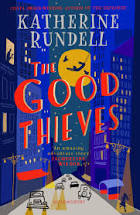
It would be unwise to start a Katherine Rundell story if you have some pressing business to attend to because once started her books are almost impossible to put down.
Within the first few lines of The Good Thieves we are offered the thought that “it is not always sensible to be sensible” and if that doesn`t conjure up the prospect of deeds of derrin` do with a bit of mischief thrown in, nothing will. The intriguing title in any case suggests a slightly sideways look at the world and perhaps that is as good a way as any to describe Rundell`s writing. From The Girl Savage and Rooftoppers, through The Wolf Wilder, The Explorer and Into The Jungle (the latter also reviewed here), her stories swing along with verve, panache and an assemblage of vibrant characters, all of whom you would like to spend some time with, even if you feel you might not be able to keep up with them.
In The Good Thieves we meet Vita, standing alone on the deck of a ship and nodding towards the approaching city of New York “as a boxer greets an opponent before a fight.” How could you not want to know what has brought her and her mother here? Soon you discover she has come to right a terrible wrong and though she may be “small, and still, and watchful”, with one leg bearing permanent testament to a bout of polio she caught when she was five, we soon learn she is nothing if not determined.
Rundell is an author you can trust: despite any number of setbacks and apparently insurmountable difficulties you know Vita will triumph. It is in the telling of how she does so that the magic happens and the adventure takes off. In the company of three, at first unlikely looking, companions, all on the edge of respectable society in their own ways, a plan to thwart the (properly villainous) criminal who has wronged her family are drawn up. Loyalties are put to the test and prove steadfast, friendships are forged and always great courage is displayed, not simply physical courage, though there is that, but also the courage to go against convention when the situation demands.
The descriptive writing is a joy, conjuring up never-to-be-forgotten images - coffee looking like “angry mud”. There is humour, the usual wit and, as we have come to expect from this author, the occasional acerbic though always understated observation which appears to signal the moral compass by which Rundell`s characters are guided.
Clothes and costumes, disguises – especially disguises – colour, music, performance, tenacity, vagabonds and rapscallions all fizz throughout the story and in the end triumph over snobbery, selfishness and doubt. Heart-stopping and heart-lifting in equal measure this is also a book which for once doesn`t cast a “Susan” in a sensible role (see Swallows and Amazons). For that I send a personal thanks to Katherine Rundell.

Sunday, June 7, 2020

“The Power Of Some Needs The Folly Of Others.”


Was ever a book more needed than this one?

Reader, Come Home
comes in the wake of Maryanne Wolf`s previous book, Proust and the Squid, in which she charted mankind`s invention of reading and the way in which that invention changed our brains, which in turn “altered the intellectual evolution of our species”.

In Reader, Come Home the author demonstrates that reading in the digital world re-wires our brains and suggests that, with some urgency, we should take a long hard look at the implications of that, especially for young people.

Wolf is a neuroscientist and her explanation of what happens in the brain is properly based on a wide range of research. But this is not a dry, scientific thesis. She uses metaphor and anecdote to communicate complicated processes and addresses the reader in the form of letters, coaxing us to contemplate the somewhat unnerving ramifications of her findings.

Central to an understanding is the perhaps surprising notion that “in the evolution of our brain`s capacity to learn, the act of reading is not natural”. It is the `plasticity` of the brain which has enabled us to develop this wonderful skill: unfortunately it is that very plasticity, the active way in which the brain is reacting to digital media, which may mean we are in danger of losing our ability to read “deeply”.

And that does not mean reading lots of very worthwhile literature. In this context it means reading attentively, as an act of contemplation which helps develop qualities of empathy and skills of critical analysis. Wolf argues that because digital media – the medium is the message – can be demonstrated to significantly alter the brain`s wiring, we are in danger of losing those skills and qualities.

Importantly, though, Reader, Come Home is far from being a Luddite`s charter. The author describes our transition to a digital culture as “the greatest explosion of creativity, invention and discovery in our history.” Rather, her exciting and radical proposition is that we work towards an understanding of the “limits and possibilities of both the literacy based (reading) circuit and digital-based ones”, aiming for the “best possible integration” of both.

And Wolf`s conclusions are perhaps the most arresting. She suggests that if we ignore these warnings it will be a massive abrogation of our responsibility to educate in a way that produces readers who are capable of analytical engagement rather than passive consumerism.

If we fail, she argues, it is a short step to populations who lack empathy, especially if they are denied the time and space to read a wealth of stories and who are unable to “process information vigilantly,” therefore being susceptible to propaganda and demagoguery.

Hence the importance of this book. Everyone should read it: parents and librarians, anyone who thinks they`re less able to concentrate on reading a book than they used to be and most especially teachers. And more important than reading it, is to act on it. A big ask but vital and here is a manifesto and handbook rolled into one.

Thursday, April 2, 2020

Here Be Dragons

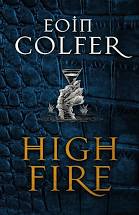
The world would be a lot duller without dragons so meet Vern, a world weary, reclusive dragon, possibly the last one left.

Vern, the eponymous hero of Eoin Colfer`s adult fantasy, High Fire, is prone to depression and acutely aware of the fragility of his existence.


He has seen more glorious days, when he was Wyvern, Lord High Fire,of the Highfire Eyrie, if, as he says “you could believe that melodramatic s**t name”. Now though he is simply focused on survival and survival is “all about profile, or the total lack of one.”

To that end he hides away in the Louisana swamp while his one friend keeps him supplied with the basic necessities of life: a reliable internet connection for reality shows and Netflix, which he watches from the comfort of his La-Z-Boy recliner; groceries including Cocoa Puffs, Cheerios and gallons of soya milk, not forgetting copious quantities of vodka, his Flash Dance t-shirts and a sort of edgy companionship - when Vern is in the right mood.

But then life gets complicated. Enter Squib a “swamp-wild, street smart, dark- eyed, Cajun-blood tearaway” and Constable Regence Hooke, a crooked cop with designs on Squibs momma and the fun begins.

And that`s the thing. The novel is huge fun, a joyous ride, full of twists and turns as the protagonists duck and dive around each other (quite literally occasionally) with boat chases, smuggling, explosions, and some of the snappiest dialogue you`ll ever hear.

In fact it is the writing which is the most joyous thing of all. The narrative sweeps you into a completely believable, totally fantastic world where dragons get really upset at the mention of Game of Thrones, (“Are you trying to push my buttons,kid? Game of f***ing Thrones! Those dragons are like servants…..Heap of s**t”) crooked cops don`t know when to quit and a boy who started out with nothing much going for him discovers his place in the world.

It is sweary and lewd but with an underlying moral compass guiding the story to a perfect resolution and best of all it is laugh-out-loud funny. Pure, unadulterated delight from start to finish…...unless you`re too old for dragons of course.


Impossibly Good

 One of my favourite authors has done it again. With Impossible Creatures Katherine Rundell has upped the ante on fantasy stories.   Here th...